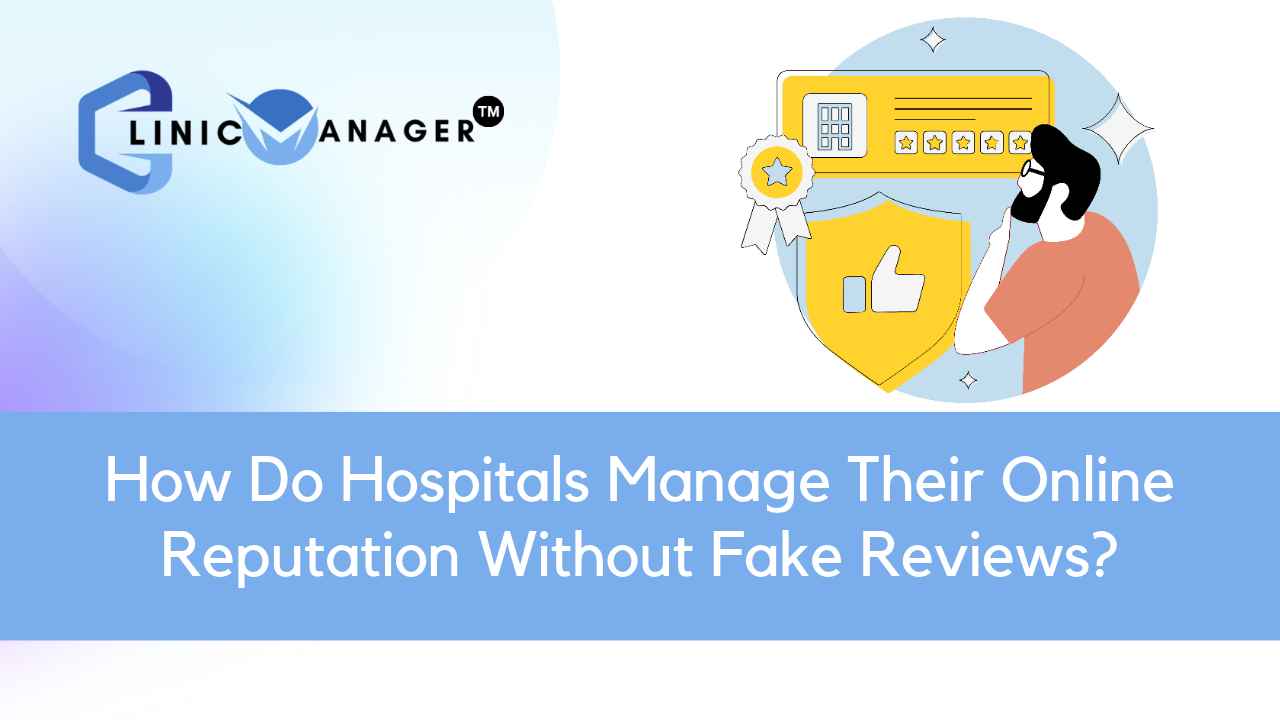
Hospitals manage their online reputation by monitoring reviews and mentions, asking real patients for honest feedback, replying to every review politely without sharing any patient details, fixing the problems that reviews reveal, and keeping their Google Business Profile and website accurate. Fake reviews are not part of a safe strategy, because platforms remove them and patients notice them. Reputation is built over time by good service, quick responses and consistent follow-up.
Overview
When a patient is choosing a hospital, the decision rarely starts in the waiting room. It starts on a phone, with a search, a rating and a few reviews. A hospital with a thoughtful reply to a complaint can look more trustworthy than one with only perfect scores that seem too good to be true. Managing that reputation is now part of running a hospital. If you want help building a process, you can talk to the ClinicManager team.
ClinicManager is a healthcare marketing agency that offers online reputation management along with patient lead generation, medical SEO, website development and social media management. We have already written about what to do about bad reviews as a doctor and why your Google Business Profile matters. This post focuses on how a hospital can manage reputation properly, without shortcuts.
What Is Online Reputation Management for a Hospital?
In simple words
● Watching what patients and the public say about the hospital online
● Encouraging honest feedback from real patients
● Responding to reviews and questions in a professional way
● Fixing the issues that feedback reveals
● Keeping official profiles and information accurate
Reputation management is mostly about listening and responding well, not about hiding criticism.
Meet the ClinicManager Team
ClinicManager works with doctors, clinics, hospitals and healthcare brands, with services that include online reputation management, medical SEO, patient lead generation and social media management.
Professional Highlights
● Online reputation management for healthcare brands
● Google Business Profile and review process support
● Medical SEO and content
● Social media management and press releases
● Patient lead generation and landing pages
Call +91-89206 16669, message the team on WhatsApp, or follow tips on Instagram.
Why Are Fake Reviews a Bad Idea?
Some agencies or staff members are tempted to post reviews written by employees or paid strangers. It rarely ends well.
What can go wrong
● Platforms detect and remove suspicious reviews, and can penalise profiles
● Patients notice repetitive, unnatural language
● A sudden jump in five-star reviews can look suspicious
● It damages trust when the real patient experience does not match
● Healthcare is a sensitive field, and misleading claims can create regulatory problems
Real reviews from real patients are slower to build, but they are the only kind that last.
How Can a Hospital Get More Genuine Reviews?
1. Make It Easy
Share a simple review link through the discharge process, SMS or a QR code at the front desk. The easier it is, the more patients will do it.
2. Ask at the Right Time
Ask when patients have had a positive experience, such as after a smooth discharge or a successful treatment, and do so politely.
3. Ask Everyone, Not Only Happy Patients
Selectively asking only those who are likely to be happy can look manipulative. A fair process lets honest feedback come through.
4. Do Not Offer Rewards for Positive Reviews
Incentives for good ratings can break platform rules and damage trust. Thank patients without attaching conditions.
5. Train the Front-Line Staff
Reception and nursing staff shape the patient experience. A short briefing on how to ask for feedback can make a big difference. Read more in our guide on whether social media actually brings doctors new patients.
How Should a Hospital Respond to Reviews?
A simple approach
● Reply to everyone: Positive and negative reviews both deserve a response
● Respond quickly: A prompt reply shows you care
● Stay calm and polite: Never argue publicly
● Protect privacy: Do not confirm that the reviewer was a patient or share any treatment details
● Move the conversation offline: Invite them to contact the hospital directly by phone or email
● Learn from it: Share patterns with the relevant department
An example of a safe reply
“Thank you for your feedback. We are sorry to hear about your experience. Please contact our patient relations team on the number listed so we can look into this properly.”
This kind of reply is respectful and does not disclose any medical or personal details.
How Do You Handle Fake or Unfair Reviews?
● Check whether the review breaks the platform’s rules, such as spam or abuse
● Flag it for removal through the platform’s reporting tool
● Reply professionally in the meantime
● Keep records and screenshots
● Do not retaliate or accuse the reviewer publicly
Not every unfair review will be removed, but a calm and factual reply helps readers form their own view.
What Else Shapes a Hospital’s Online Reputation?
Things beyond reviews
● Google Business Profile: Accurate timings, services, photos and contact details
● Website: Clear, current and easy to use
● Search results: What appears when someone searches your hospital’s name
● Social media: How you respond to comments and messages
● Staff behaviour online: Public posts by staff can affect the hospital’s image
● Crisis readiness: A clear plan for how to respond if a serious complaint goes viral
Our guide on digital marketing strategies for hospitals shows how these pieces fit together.
Why Choose ClinicManager for Hospital Reputation Management?
Key advantages
● A focus on healthcare, where privacy and tone matter
● Reputation work that connects to SEO, ads and the website
● A process built on real patient feedback
● Clear guidance on responding without sharing patient details
● Support from a team that handles multiple healthcare brands
See how reputation supports growth in our guide to Google Ads for doctors and clinics and watch explainers on YouTube.
Signs Your Hospital Needs Reputation Management
● Unanswered reviews on Google
● A rating that does not match your quality of care
● Repeated complaints about the same issue
● Outdated or incorrect information on your profile
● No process for asking patients for feedback
● Negative content appearing high in search results
What Is the Reputation Management Process?
- Audit: Review ratings, comments, search results and profile accuracy.
- Process design: Create a simple way to ask for feedback and respond.
- Training: Brief the front-line team on tone and privacy.
- Monitoring: Track new reviews and mentions regularly.
- Review and improve: Share insights with leadership each month.
What Are the Benefits of Good Reputation Management?
✔ More trust from patients who are comparing hospitals
✔ Better visibility in local search
✔ Early warning on service problems
✔ A calm, consistent way to handle complaints
✔ A stronger base for ads and referrals
How Can You Track Whether It Is Working?
Simple measures
● Average rating and number of new reviews each month
● Response rate and response time
● Share of reviews that mention specific issues
● Calls and direction requests from your Google profile
● Branded search results over time
A rising number of genuine reviews and faster responses are early signs that your process is working.
Why Do Hospitals and Clinics Across India Choose ClinicManager?
● A healthcare-only focus and an understanding of patient trust
● Honest advice that avoids shortcuts
● A broad range of services under one roof
● Clear, plain communication
● Regular education on LinkedIn and Facebook
Conclusion
A hospital’s online reputation cannot be faked, and it should not be. It is built by listening to patients, replying with care, protecting privacy and fixing what reviews reveal. Genuine reviews, quick responses and accurate profiles will always outlast shortcuts. If your hospital needs a clear, ethical process, the ClinicManager team can help you set it up.
Contact ClinicManager
Phone: +91-89206 16669
Talk to the ClinicManager team about hospital reputation management here
FAQs
What is online reputation management for hospitals?
It is the process of monitoring, encouraging and responding to what patients say online, and keeping official profiles accurate, so the hospital builds trust.
Should hospitals reply to negative reviews?
Yes. A calm, polite reply that does not share patient details and invites the reviewer to contact the hospital directly shows care and professionalism.
Can a hospital remove a negative Google review?
Only if it breaks the platform’s rules, such as spam or abusive content. A genuine negative review should be answered, not hidden.
Is it okay to buy Google reviews?
No. Fake or paid reviews can be removed, can harm your profile, and damage trust.
Where can I get help with hospital reputation management?
Call ClinicManager on +91-89206 16669 or message the team on WhatsApp.